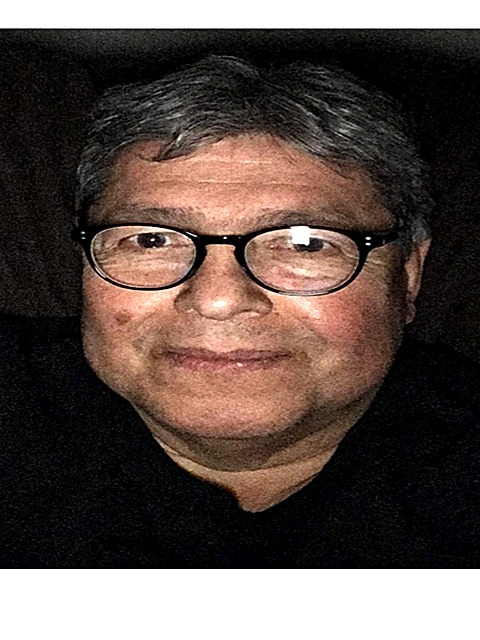
Carlos Menendez
Vietnam Veteran · Retired Chief Information Officer · 13-Year Elementary Educator · Author of Learning Beyond the ClassroomCarlos Menendez built Opening Young Minds from a lifetime of learning outside the classroom — through stories, media, service, and thirteen years watching children the system had written off become the most capable readers in the room.
A Life Shaped by Learning Outside the Classroom
Carlos Menendez grew up in El Salvador, where his grandfather read him Alexandre Dumas and Victor Hugo. When he arrived in the United States without English, he did not find language inside a textbook. He found it in the movie theaters of Los Angeles — watching American films, absorbing not just words but rhythm, context, and story structure. That is where his understanding of how people actually learn was formed.
He served in the U.S. Army during the Vietnam era, then built a nearly three-decade career in information systems, rising to Chief Information Officer. He learned to think rigorously about systems, process, and design — and how institutions fail the people they are built to serve.
And then he did what he had always intended: he went back to teach. For thirteen years, Carlos taught grades one through five in California public schools. He worked with the students most often described as behind, disengaged, or unreachable. He found, year after year, that those students were not behind at all. They were reading — films, comics, song lyrics, signs, and stories — at full capacity. They simply needed someone to meet them there.
“I built this for the child who is waiting. And I built it for the educator who has not given up on finding them.”
— Carlos Menendez, Learning Beyond the ClassroomOpening Young Minds is the record of those thirteen years. Not a theory. A record of what worked — lesson by lesson, child by child — when an educator stopped forcing the wrong text on the right learner, and started finding the text that fit.
Built for the Child Who Has Not Given Up
There is a child in a classroom right now who has given up on reading. Not because they cannot think. Not because they are not intelligent. Because the story is the wrong shape for the way their mind works.
Opening Young Minds is built on a single conviction: every child is already a reader. They are reading the films they love, the comics they cannot put down, the song lyrics they have memorized without trying. The educator's job is not to introduce them to reading — it is to meet them inside the reading they are already doing, and build the bridge from there to the academic literacy their futures require.
The framework uses movies, television, comics, graphic novels, song lyrics, and environmental print as serious educational texts — not rewards, not supplements, but the primary vehicle for teaching the literacy and critical thinking skills that academic standards require.
The Opening Young Minds Learning Tree
Four decades of learning, service, and teaching — brought together in one framework.
The Bridge to Literacy Is Shorter Than You Think
The students Opening Young Minds was designed for are not failing to learn. They are learning constantly — from the films they watch repeatedly, from the comics they read cover to cover in a single sitting, from the song lyrics they have memorized without being asked. The problem is not the learner. The problem is the assumption that academic literacy must begin with academic texts.
The Learning Tree is a structured analytical tool that works with any text in any medium. Its six branches — WHO, WHAT, WHERE, WHEN, WHY, and HOW — gather information from the surface of a text with the same rigor a journalist would bring. Its three roots — COULD, SHOULD, and WOULD — push students deeper: from description into evaluation, from evaluation into imagination, and from imagination into genuine moral reasoning.
COULD opens the door for every learner in the room. SHOULD turns observation into judgment. WOULD makes the learning personal — the moment a text stops being something a student reads and becomes something a student lives. Start with a scene from Moana. You will end up in a conversation no standardized curriculum could have produced, and that no student will forget. This is what the bridge looks like.
Works with any text — film, comic, song lyric, graphic novel, environmental print, or traditional literature. Grades K–8 and beyond.
The Opening Young Minds Resource Library
Three ways to bring the framework into your classroom or home — right now.
Learning Beyond the Classroom
The complete 15-chapter framework for media-based literacy instruction. Every method, lesson structure, and analytical tool Carlos developed over thirteen years in the classroom — in depth. Available on Amazon.
Get the BookQuick Start Guide
The full Learning Tree, a complete Moana lesson plan, reproducible organizers, and discussion prompts — free for every educator and parent. The fastest way to see the framework in action.
Download Free GuideFree Video Lessons
Complete lesson walkthroughs — free for every educator and parent. Watch exactly how Carlos uses the Learning Tree with films, comics, songs, and more. New lessons published regularly.
Watch Free Lessons
Meet the child where
learning already begins.
Start with the book, download the free guide, or watch a lesson — and bring the framework into your classroom or home today.